Changelog
See the latest feature releases, improvements and bug fixes.
February 18, 2026
Version 1.1
Version 1.1 brings a set of targeted improvements across the toolbox. The focus of this update is bug fixing, compatibility, and a new inspection feature for the TypeScale Checker. No breaking changes.
Project Setup: Improvement
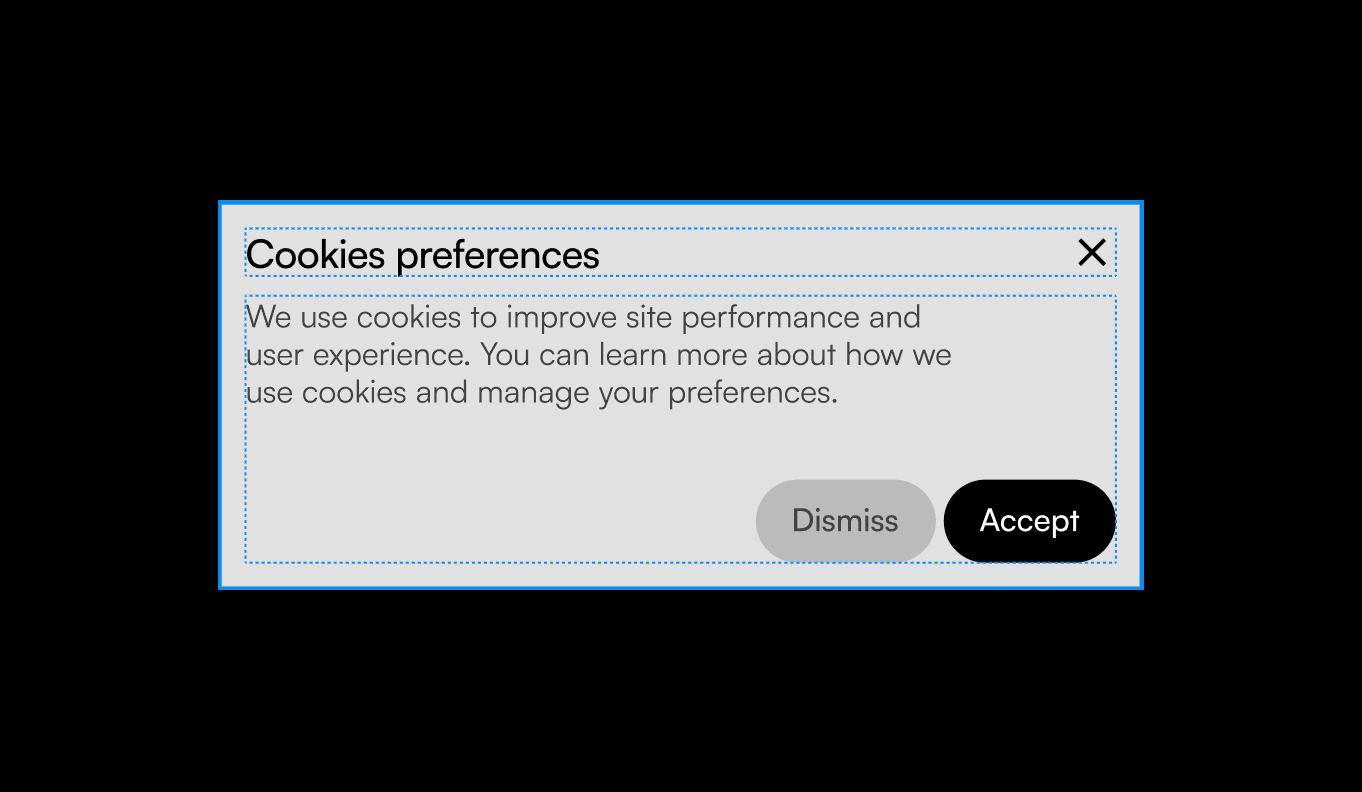
The cookie banner layout is now included as part of the generated project setup. Users can customize it to match their project's requirements.
Two additional notes for this section:
The open graph placeholder aspect ratio has been corrected to 1200 x 630.
Skip link and focus ring layout are coming in a future release.
TypeScale Checker: New Feature
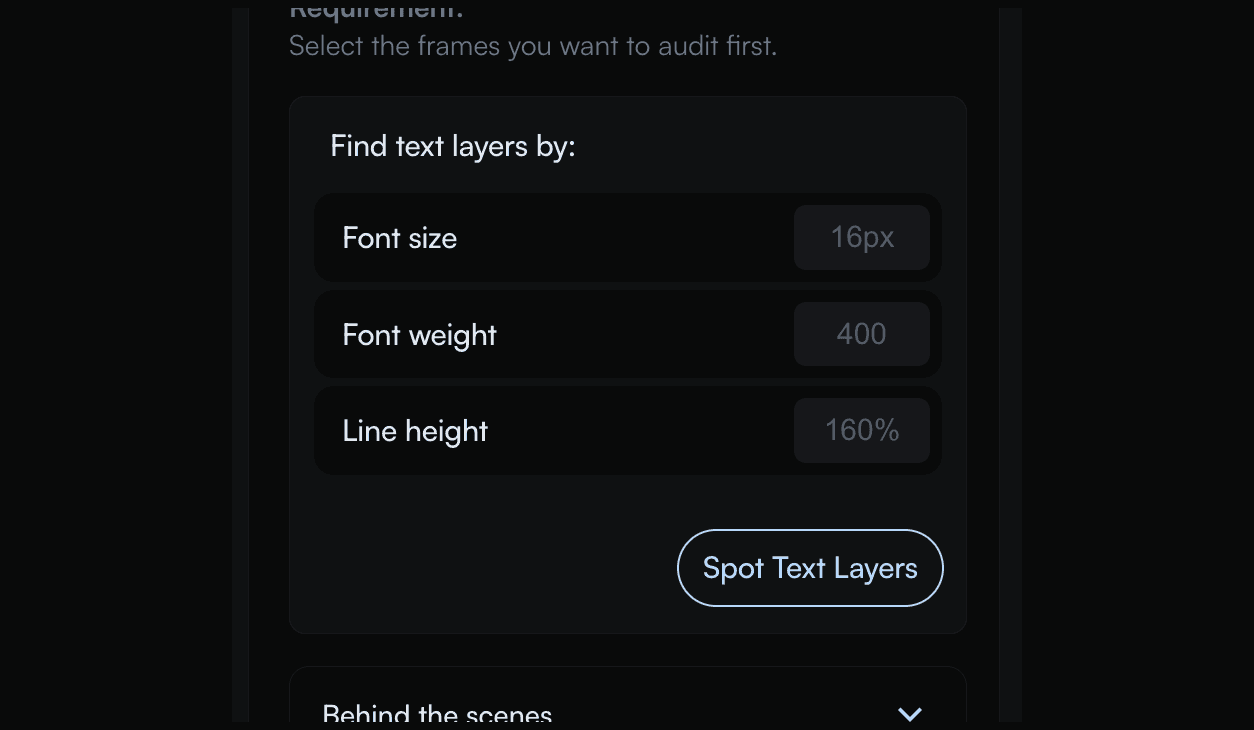
After running the TypeScale audit, you can now use the Spot Text Layers functionality to locate exactly where each audited font configuration is being used across your frames. Select the frames you want to audit, define the font size, weight, and line height, and the tool will highlight every matching text layer.
Two compatibility improvements are also included:
Variable fonts are now supported. Font weight values will display as numeric (e.g. 400, 450).
Text layers that contain more than one style are now handled correctly. The plugin returns each style as a separate layer instead of grouping them.
Text Styles Generator: bug fix
The automation now searches for the "TypeScale Audit" frame only within the current page, not across the entire file. This prevents conflicts when multiple TypeScale audit frames exist in different pages from previous iterations.
Styleguide Generator: Color bug fix
Color swatches in the generated styleguide now reference the actual variable instead of the raw HEX value.
January 1, 2026
Lio Method, initial release.
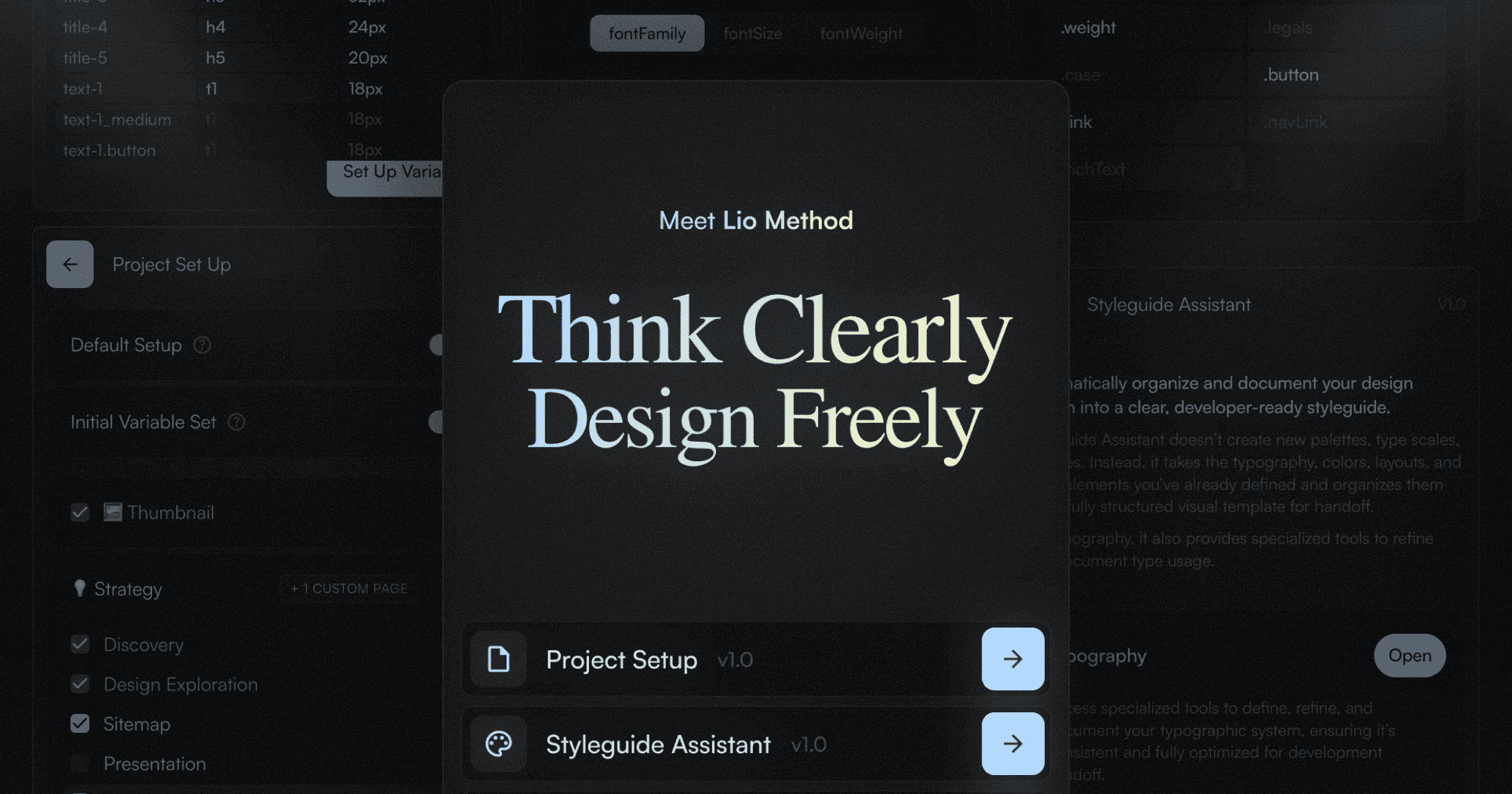
This release introduces a practical approach to web design systems focused on real decisions, real constraints, and long-term usability. Instead of prescribing a rigid framework or a predefined set of rules, the Lio Method is designed to help teams document what is proven, enforce consistency where it actually matters, and avoid premature systematization.
The Method is intentionally opinionated, but lightweight. Its goal is not to standardize creativity, but to remove unnecessary noise and repetition from the design process, especially in complex and evolving web projects.
What's included in this release
This initial release documents the core foundations of the Lio Method, including how to approach:
Color decisions and systematization
Typography structure and scaling
Layout-related tokens and constraints
The relationship between exploration, decisions, and documentation
Each section focuses on why and when something should become part of a system, rather than defining everything upfront.
A decision-driven approach
At the core of the Lio Method is a simple idea: design systems should be built from real decisions, not theoretical rules.
Structure is introduced only when patterns are clear and repeated. Documentation exists to support the work, not to predict it. This makes the system easier to maintain, easier to communicate, and more resilient as projects grow.
Built for real web workflows
The Lio Method is grounded in Material Design principles and adapted to modern web workflows. It has been shaped and tested in real production environments, supporting real client projects with real constraints.
It is actively used and evolved at Refokus Agency, where it continues to be refined through daily use rather than abstract planning.
How this connects to Lio Toolbox
This release focuses on the Method itself. Lio Toolbox is the tooling layer that supports it: automating setup, reducing mechanical work, and turning decisions into living documentation inside Figma.
While the Method can be understood on its own, it works best when paired with the Toolbox that was designed specifically to support it.
What's next
This is the foundation. Future updates will expand on existing sections, refine patterns based on continued use, and introduce new tooling and documentation as the system evolves.
As with the Method itself, updates will be driven by real needs, not speculation.
Any other questions? Get in touch.