The Lio Method
Introduction
Good design doesn't start from components, it starts from decisions.
What The Lio Method is
The Lio Method is a flexible and scalable design framework that helps designers start, evolve, and maintain web design projects using a minimal design system instead of complex, fully specialized token layers.
Instead of a component kit, it provides a thinking model, making it ideal for designers who must begin designing before the brand or UI rules are fully defined.
Root inspiration: Material Design, interpreted
Lio is inspired by Material Design, but it’s not a simplified clone nor a reduced version:
It is an applied reinterpretation built for the specific workflow, timing, constraints, and goals of web design projects.
Material Design was created for product interfaces. Lio was created for web communication experiences. Where Material focuses on precision, depth and semantic accuracy, The goal of Lio is simple: remove friction, give structure, and let your design thinking shine.
Material tells you how everything should be. Lio helps you build what needs to exist today.
Why The Lio Method exists
Real problems web designers face
Web projects frequently start under conditions where:
The brand is under definition or redesign
Content is not finalized yet
Stakeholders request visual outcomes early
Layout, messaging, or art direction may pivot
Deadlines prioritize delivery over theory
Documentation must be light and practical
Designers end up in a paradox: They must deliver fast like execution designers while maintaining a level of quality that’s hard to achieve under those conditions.
The cost of using product-level design systems
Too much theoretical structure, not enough practical value.
Pain | Result |
|---|---|
Too many decisions upfront | Slow start |
Deep token granularity | Mental overload |
Abstractions not aligned to web | Naming confusion |
System built before real needs | Rules unused |
Setup > Design time | Frustration & rework |
The Gap Lio intentionally fills
No System | Full Product System | Lio Method |
|---|---|---|
Fast but chaotic | Stable but slow | Fast + structured |
Decisions ad-hoc | Decisions pre-defined | Decisions contextual |
Hard to scale | Hard to start | Easy to start, easy to scale |
Core insight
A usable design system must start small, be useful immediately, and scale only when reality demands it. This is evidence-based system building, not assumption-based.
Why Figma + Lio Toolbox matters
Although the methodology exists conceptually, its intended usage is practical, automated, and exclusive to Figma, because:
Variables replace manual styling
Automation replaces setup time
Designers think systemically from day one
Handoff aligns with developer semantics
Documentation and production remain in the same file
Lio Toolbox is not an add-on, it's the operational counterpart of the method.
The Lio mindset shift
If a system slows you down, it's not a system, it's a burden. If a system helps you think, decide, and communicate better, then it works.
Most traditional design systems follow this logic:
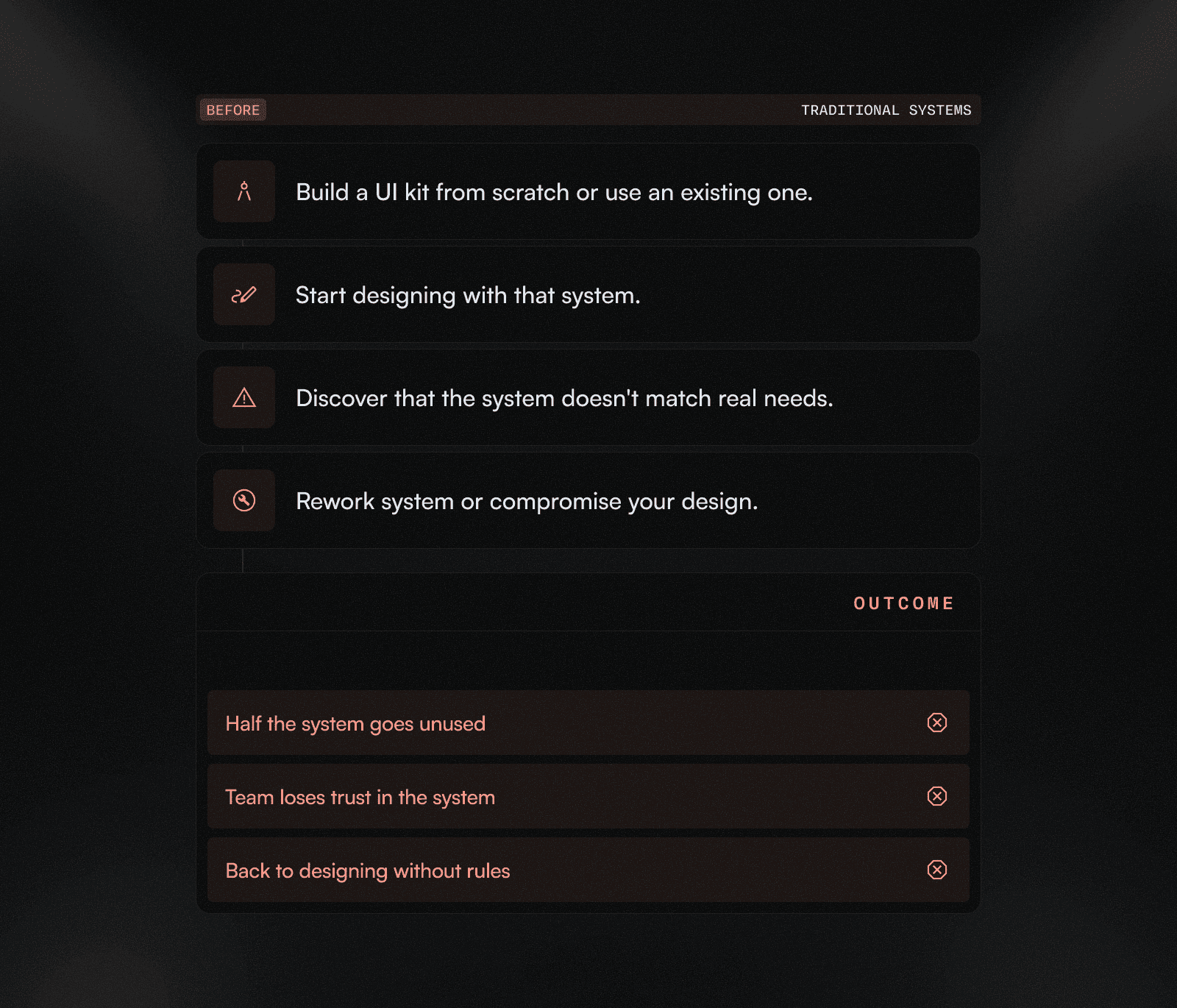
This means the designer tries to create all tokens, rules and components upfront, before having real content, visual direction, or validated layout needs.
In web design, this approach often leads to over-engineering, because many of those early decisions may change or never be used.
The Lio Method flips the logic:
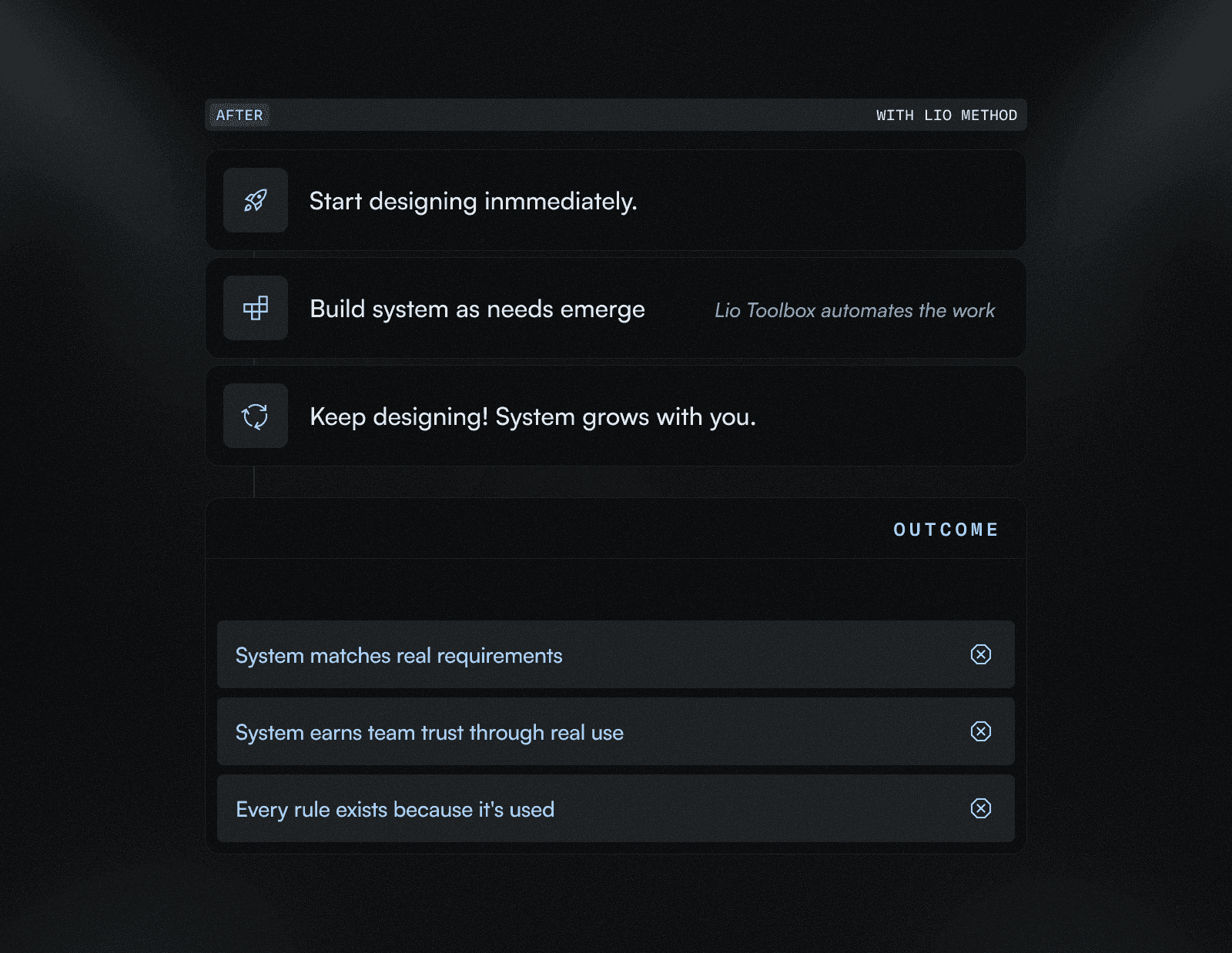
Instead of building a system based on assumptions, Lio builds a system based on real design needs discovered during the project.
You don’t wait to “finish the system” to begin. You begin, and the system evolves with evidence while you design.
Where The Lio Method fits best
Landing pages & marketing sites
Brand refresh projects
Editorial or narrative-driven websites
Exploratory web design phases
Multi-client workflows
Where it is not the best fit
Enterprise-level multi-platform design systems
Multi-state UI-driven products
Mobile OS-level interface frameworks
Interaction-heavy applications
Web design teams face different realities compared to product teams:
Product design reality | Web design reality |
|---|---|
Stable app surfaces | Variable page layouts |
Long-term evolution | Quick launches |
Deep interaction patterns | Narrative + visual storytelling |
Predefined semantic tokens | Unknown visual identity at start |
Roadmap-based | Iteration + exploration |
Lio exists because web designers need a design system approach that matches how websites are actually built: visually, iteratively, and fast.
Any other questions? Get in touch.